B601 × LingBot-VLA v2
Bringing teleoperation demos, VLA inference and real dual arm manipulation together on the B601.
Led the project and the real-robot validation: planned demonstration capture, checked the pipeline from model inference to arm execution, logged field issues and iterated with the engineering team.
This run took almost four hours at the bench and was cut down to 3:56. That night we collected until three in the morning.
The first requirement in collection is steadiness, the second is precision. The hand must not wander — if the motion drifts, drift is what the model learns.
The model is like a child. It has no innate intuition for what a motion means. Whatever you give it, it absorbs — every frame of it.
Collecting data is like cooking: the first pass never goes smoothly, and it gets easier and faster the more you do it.
Some poses will never appear in the real scene, so they are not worth collecting. That data still goes into the model, and it can interfere with it.
The first half is the cut version; the second half is each full run, start to finish, uncut.
A different platform — the LeKiwi wheeled base — running the same LingBot-VLA v2, as described when recorded. Someone teases it with a bubble wand; 17 seconds, original speed, with sound.
This project connects teleoperated demonstration collection, a dual arm LeRobot interface and LingBot-VLA v2 inference on a B601 platform. Selected footage shows tabletop pick, move and stack experiments. The clips document specific experiments; they do not imply universal success rates or general autonomous capabilities.
Experiments describe their actual environment and scope. Check the linked source for implementation details, license, current support and reproduction steps.
 具身智能工作台
BotverseX
BotverseX is my embodied AI workbench, connecting robots, teleoperation, data recording, training and deployment.
↗ 动作重定向 · 仿真
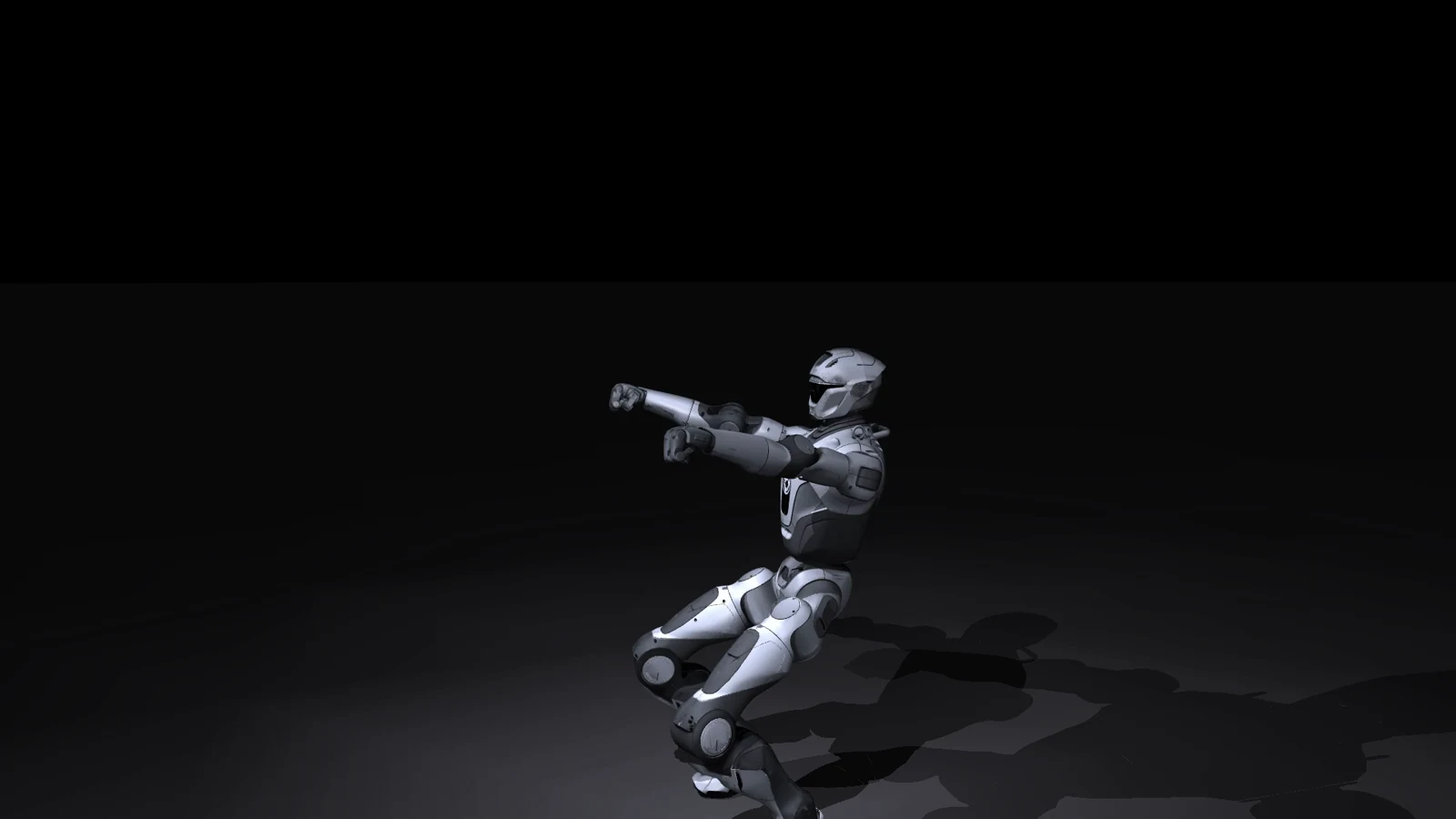
T800 / Backflip Retargeting
Moving G1 backflips from an open motion dataset onto the T800 humanoid: 1.227× leg-length retargeting, per-frame IK correction, and MuJoCo kinematic replay rendered at 50 fps. The RL branch failed to produce a policy.
↗ 强化学习 · 仿真
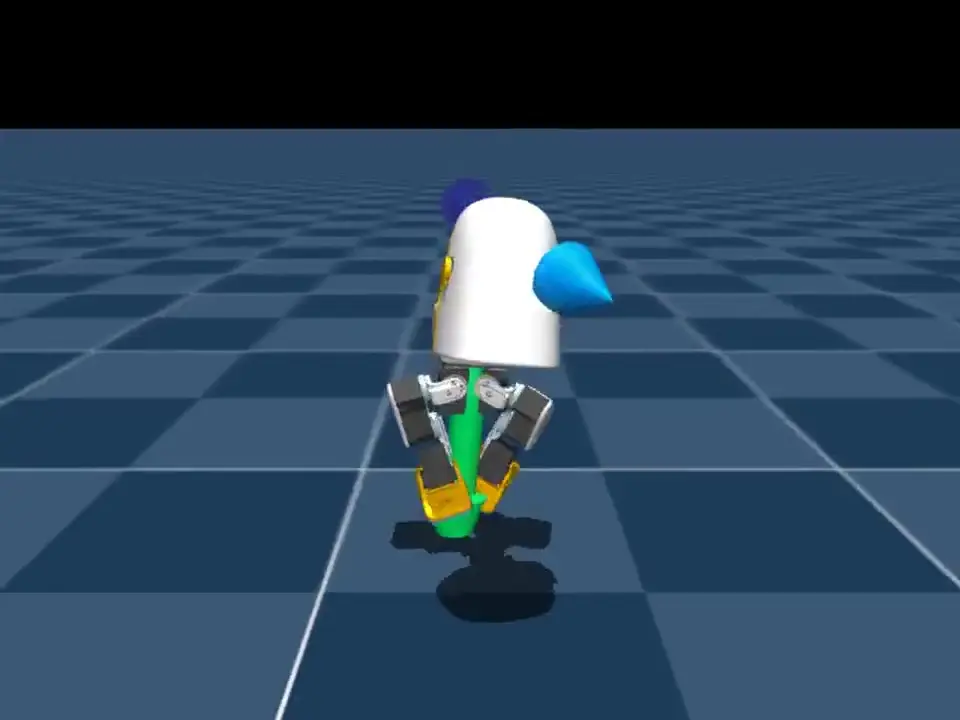
MicroDuck / 牛来
From crouching to hopping: designing rewards that teach a small biped to jump in simulation.
↗